 EN
EN
 INA
INA
Public Lecture “Political Economy: Flood Risk Management in Indonesia”
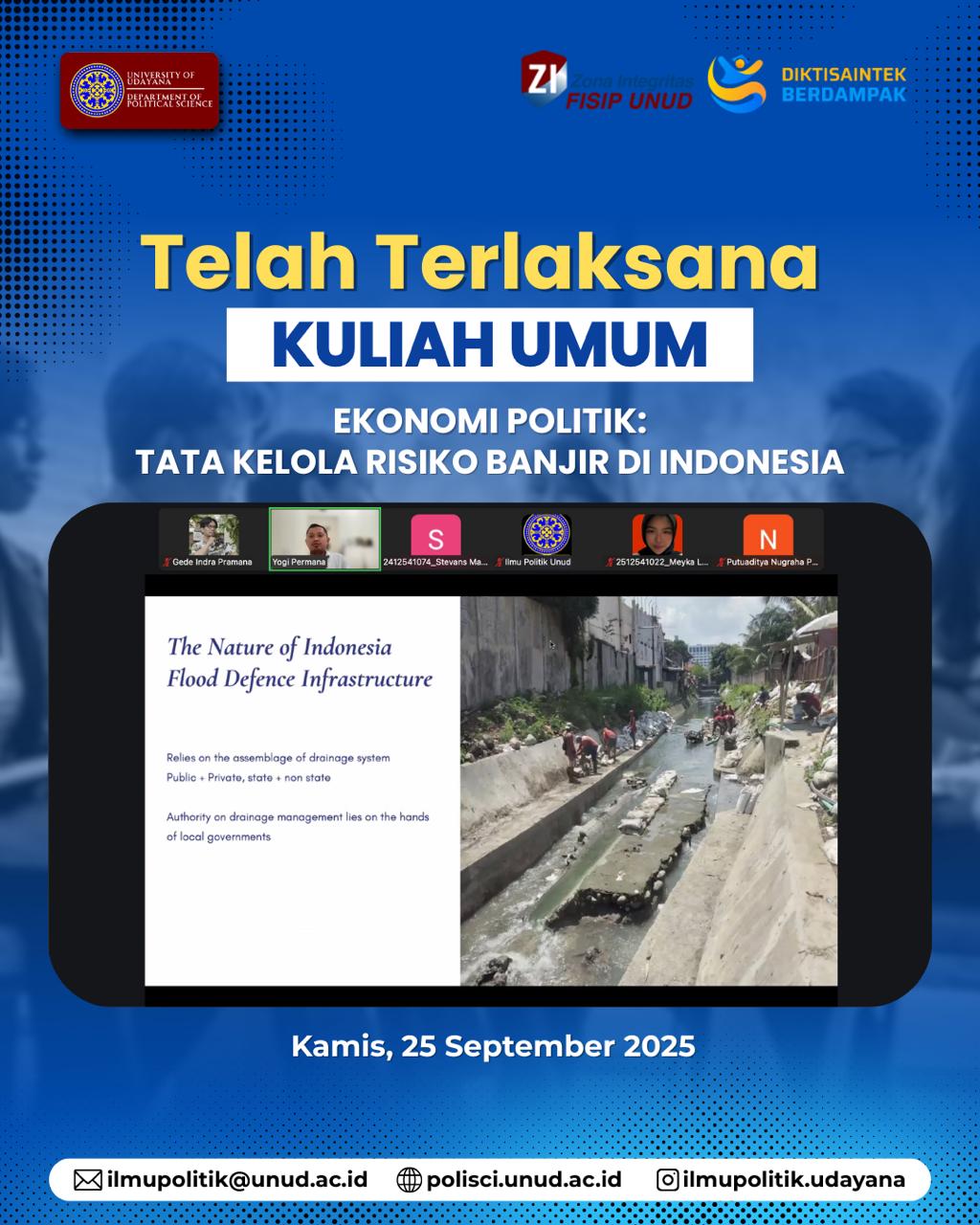
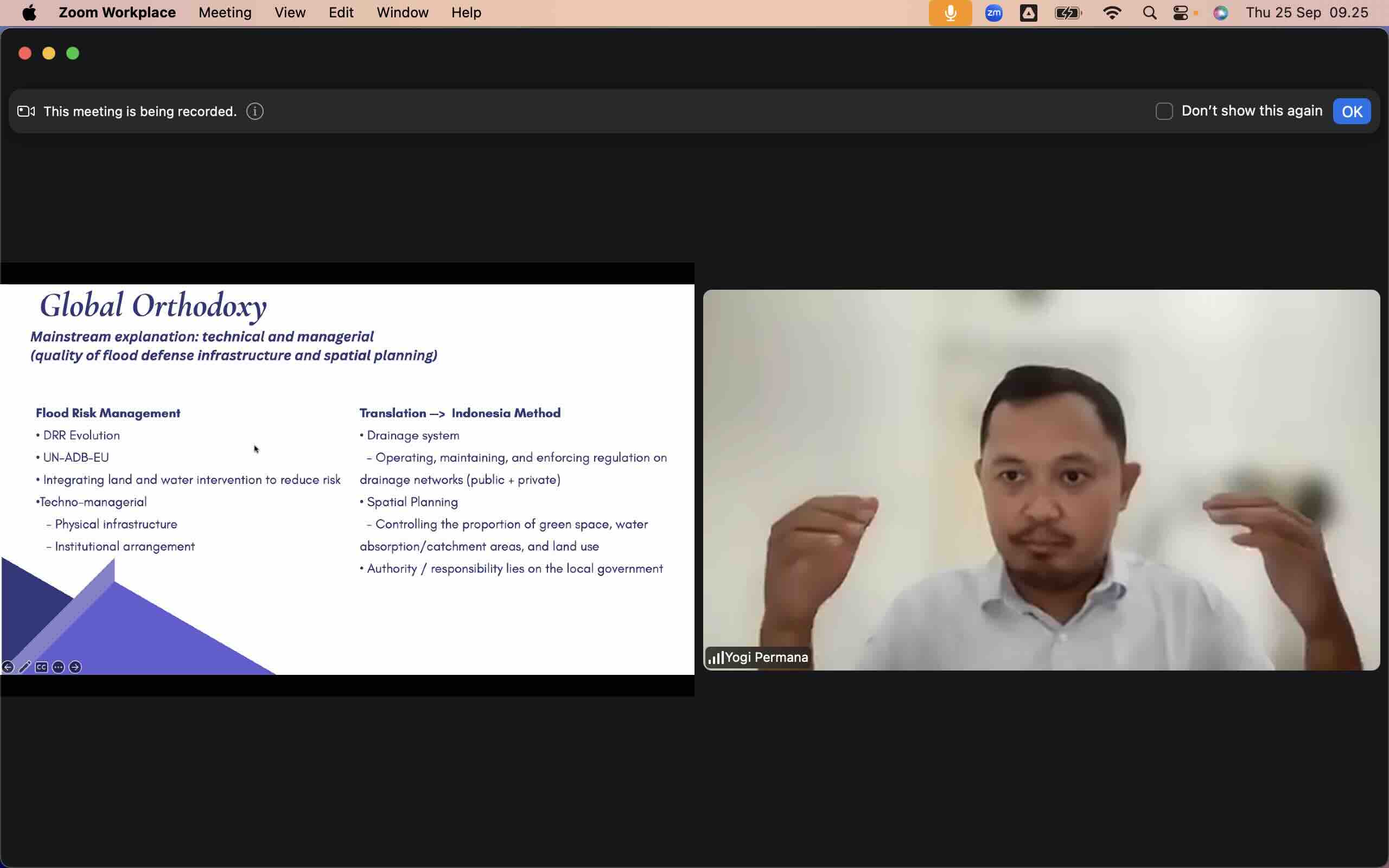
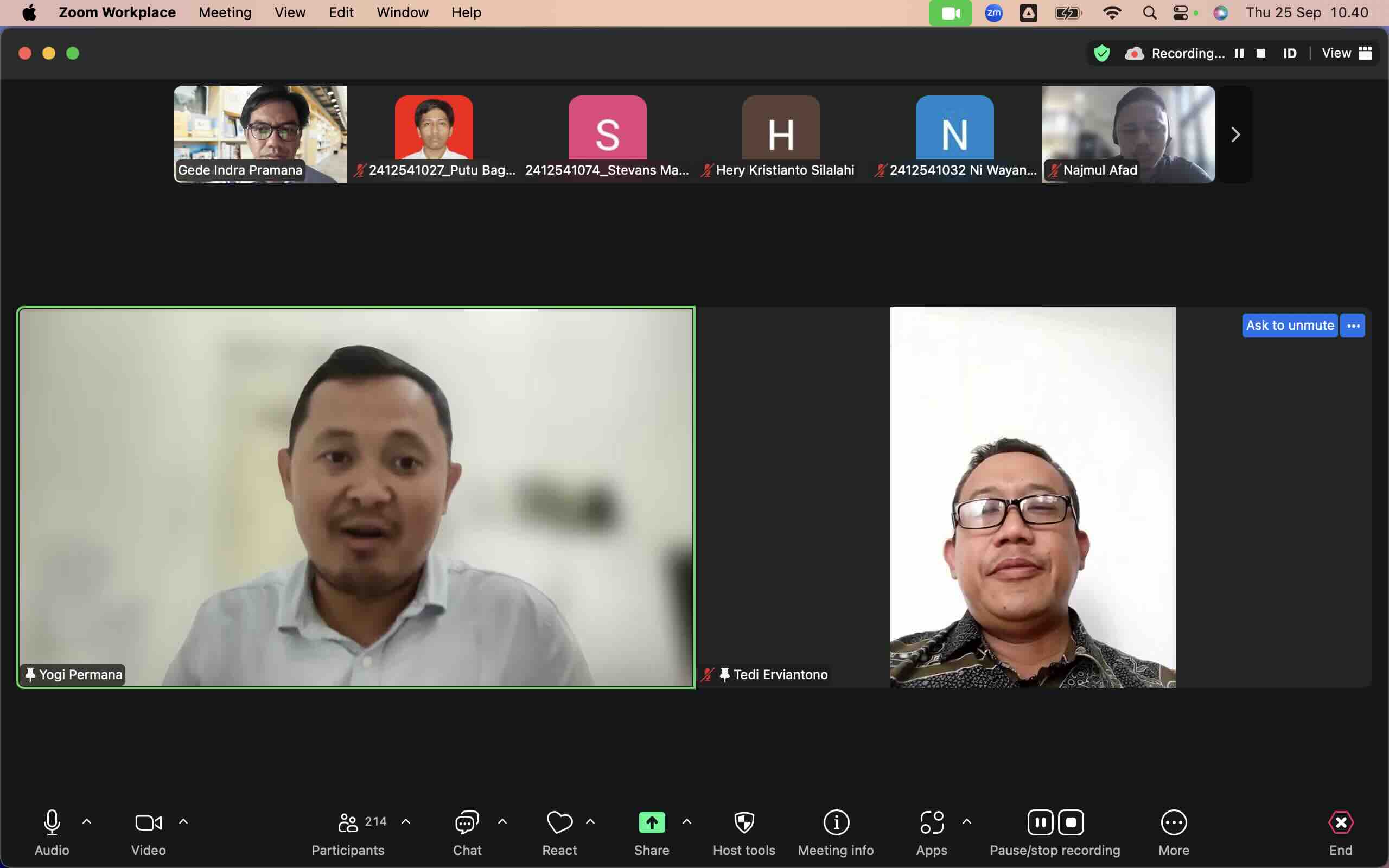
Denpasar, September 25, 2025 — The Political Science Study Program at the Faculty of Social and Political Sciences, Udayana University, held an online public lecture via Zoom on the theme of “Political Economy: Flood Risk Management in Indonesia.” The session featured Yogi Setya Permana, a BRIN researcher in the field of politics, who explained the urgency of cross-actor governance to strengthen community resilience to flood disasters.
In his presentation, the speaker emphasized that flooding is not merely a natural problem, but rather the result of interactions between environmental factors, spatial planning, budgetary policies, and institutional coordination. Therefore, effective management requires consistent data, risk-based planning, and clear accountability mechanisms from the central to the village level.
Key Points
Governance as the key: flood prevention and management require the integration of cross-sectoral policies (spatial planning, public works, social affairs, health), not just infrastructure projects.
Data & early warning: risk mapping, early warning systems that are accessible to residents, and responsive communication channels minimize losses.
Spatial planning & enforcement: consistency in spatial planning, protection of water catchment areas, and control of land use change determine the magnitude of flood impacts.
Adaptation financing: adaptive budgeting schemes (contingency funds, risk pooling, partnerships) accelerate recovery while encouraging prevention.
Community empowerment: community-based adaptation (evacuation simulations, waste banks, rainwater harvesting, school education) increases public preparedness and participation.
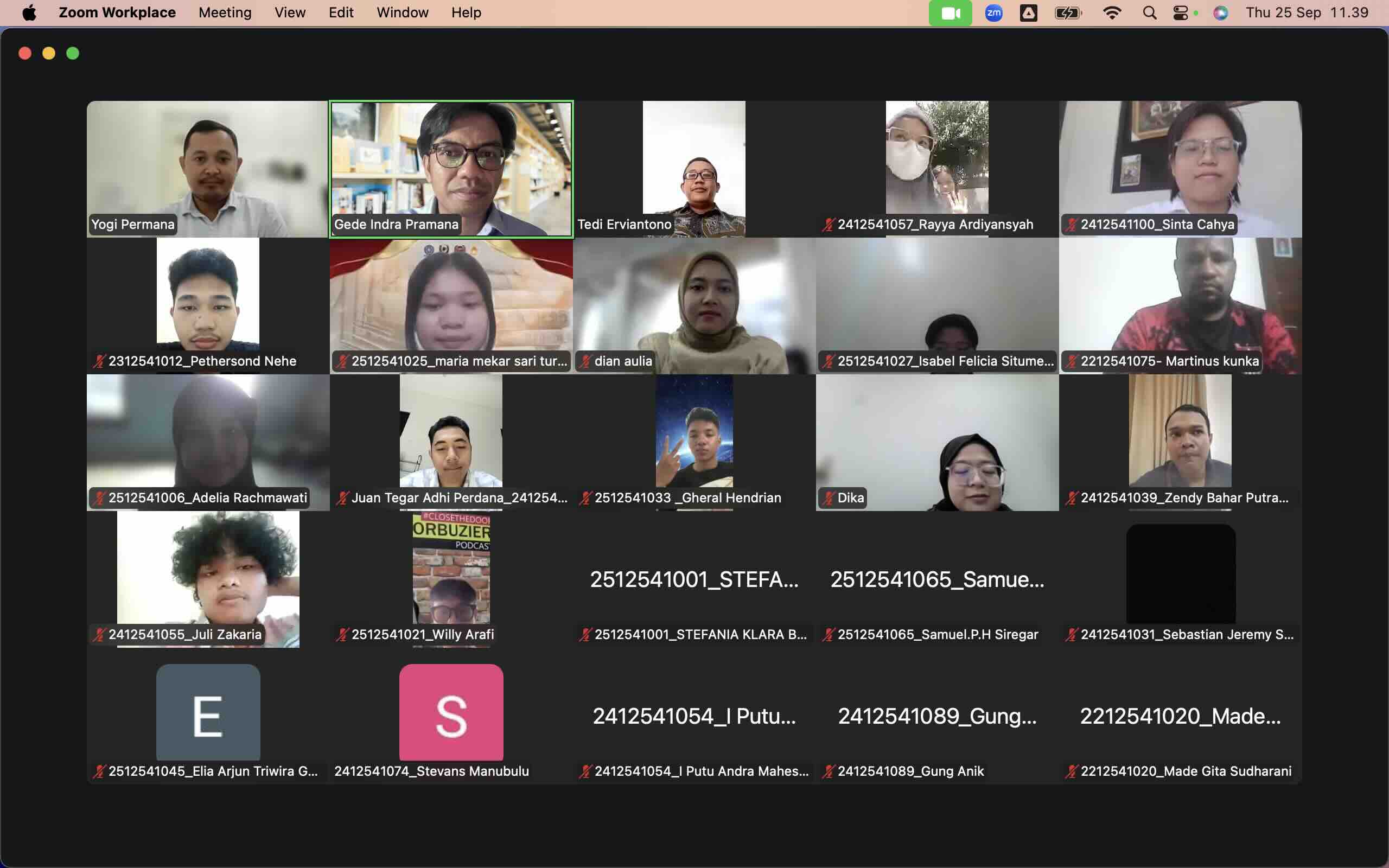
This event was attended by political science academics who enthusiastically discussed collaborative strategies between government, academia, and communities in flood mitigation. Participants also explored examples of good practices, ranging from village-level flood risk audits to data partnerships to support evidence-based decisions.
Gallery


FACULTY OF SOCIAL AND POLITICAL SCIENCE